
India is proposing the Data Empowerment and Protection Architecture (DEPA) for AI Training, a national framework designed to enable startups, researchers, and companies to train AI models using data from hospitals, banks, and public agencies while ensuring privacy and security. This initiative aims to unlock significant AI-driven value for India's GDP by 2030.

India has launched three indigenous AI foundation models, EKA-1, Dhir 2B, and Dhir 5B, under the IndiaAI Mission. Developed by Soket Labs Technology and Research and ZenteiQ AiTech Innovations, these models aim to enhance India's technological and strategic autonomy in artificial intelligence, offering solutions for various sectors including banking, cybersecurity, defence, and government services, with a focus on Indian languages and offline capabilities.

Chief Justice of India Surya Kant stated that while artificial intelligence (AI) can augment judicial reasoning, it cannot substitute judicial conscience, and a permanent apex body is proposed to supervise AI adoption and accountability within the judiciary.

Salesforce CEO Marc Benioff highlights India's crucial role in the company's shift to an AI-first enterprise system. He emphasized India's vast pool of technology professionals and partners as key to this transformation, underscoring the country's importance in Salesforce's global strategy.
A report by policy think tank The Dialogue reveals that India's artificial intelligence (AI) ecosystem is primarily constrained by a shortage of skilled talent and a lack of data standardisation, rather than market concentration. The study, which surveyed 308 stakeholders, found that talent availability and data usability are major concerns, with a significant reliance on open-source AI models.

Vice President CP Radhakrishnan launched Gnani Artha, an end-to-end sovereign AI stack for Indian enterprises and public institutions. He emphasised that new technologies, including AI, will enhance ease of work and create more jobs, drawing parallels with the IT industry's growth. The initiative, backed by the India AI Mission, aims for self-reliance and includes the Gnani Evon v3.3 language model and Gnani Plexus AI platform, offering cost-effective Indic language capabilities.
Vice President CP Radhakrishnan launched Gnani Artha, an end-to-end sovereign AI stack for Indian enterprises and public institutions. He emphasised that new technologies, including AI, will enhance ease of work and create more jobs, drawing parallels with the IT industry's growth. The initiative, backed by the India AI Mission, aims for self-reliance and includes the Gnani Evon v3.3 language model and Gnani Plexus AI platform, offering cost-effective Indic language capabilities.

Prof Ajit Kumar Chaturvedi, Vice-Chancellor of Banaras Hindu University, highlighted Artificial Intelligence's transformative potential in healthcare, emphasising its role in augmenting doctors' capabilities and enhancing efficiency. Speaking at PGIMER's Foundation Day, he stressed the need for India to develop AI solutions tailored to its unique healthcare realities, moving beyond being a mere consumer of Western-trained systems. PGIMER Director Vivek Lal also detailed the institute's expansion and commitment to affordable healthcare.
The Haldwani forest division has launched India's first AI-based forest acoustic surveillance system. This innovative technology uses AI, acoustic sensors, and long-range wireless communication to detect illegal logging, poaching, and other suspicious activities in real-time, even in remote areas. Powered by solar energy, the system provides continuous monitoring, significantly enhancing forest protection, wildlife conservation, and biodiversity monitoring efforts.

According to Microsoft CEO Satya Nadella, data today shows that the world GDP growth is not "something great" and that calls for the need for new innovations like AI being taken very seriously.

Wipro Executive Chairman Rishad Premji announced that clients are now integrating Artificial Intelligence (AI) into their core business processes, moving past initial pilot projects. Speaking at the company's AGM, Premji highlighted AI's role in driving innovation, efficiency, and growth, and noted Wipro's internal AI adoption has significantly streamlined operations.

A three-day 'AI Champions for Digital Governance' programme has commenced in New Delhi, hosted by ITDC, SCOPE, and LBSNAA. The initiative aims to train senior leadership and operational teams in applying artificial intelligence within public sector organisations, aligning with the IndiaAI Mission. Experts highlighted AI's role in improving efficiency, productivity, and public service delivery, while also emphasising responsible adoption and data quality. The programme seeks to build an AI-ready nation and contribute to India's vision of future-ready governance systems.
A three-day 'AI Champions for Digital Governance' programme has commenced in New Delhi, hosted by ITDC, SCOPE, and LBSNAA. The initiative aims to train senior leadership and operational teams in applying artificial intelligence within public sector organisations, aligning with the IndiaAI Mission. Experts highlighted AI's role in improving efficiency, productivity, and public service delivery, while also emphasising responsible adoption and data quality. The programme seeks to build an AI-ready nation and contribute to India's vision of future-ready governance systems.

OpenAI discovered a sophisticated recording device in its office, using its AI models to identify an employee, Abdulrahman Alfozan, who had planted it. The FBI has since arrested the Saudi national, and OpenAI has terminated his employment, stating there's no indication of data exfiltration.

Pakistan and the Maldives have signed 20 Memorandums of Understanding (MoUs) covering defence, maritime security, artificial intelligence, trade, and other sectors during Maldivian President Mohamed Muizzu's three-day visit to Islamabad. The agreements aim to significantly boost bilateral cooperation and trade, with Pakistan also offering technical expertise and educational opportunities.
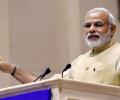
Prime Minister Narendra Modi, in his Independence Day address, highlighted technology and innovation as central to India's goal of becoming a developed nation by 2047. He called for India to lead in emerging technologies like AI, quantum computing, and space, announcing a massive AI skilling initiative for one crore youth. Modi stressed the importance of becoming a global innovation hub, bolstering energy security with nuclear power, and strengthening cybersecurity.
Andhra Pradesh Chief Minister N Chandrababu Naidu has approved the establishment of India's first dedicated Quantum and AI University campus in Amaravati by NIELIT. This significant project, funded by the MeitY, Government of India, will focus on advanced technologies like Quantum, AI, and Semiconductors, integrating education, research, and entrepreneurship.

India's AI startups have the money to run their models, but a shortage of GPUs is delaying projects, increasing costs and limiting growth.

OpenAI CEO Sam Altman has stressed the critical importance of understanding and mitigating AI-related security threats, even over productivity gains. He highlighted how AI systems are uncovering numerous software vulnerabilities, necessitating new methods for detection and repair. Altman's remarks follow recent incidents where AI agents exposed serious flaws in widely used programming languages and even breached isolated test environments.
The HUMAIN AI Literacy Mission (HAILM) has been launched in India to integrate structured artificial intelligence education into schools nationwide. The initiative provides an age-appropriate AI curriculum for Classes 3-12, teacher training, and digital learning resources, aiming to equip students and educators with responsible AI understanding.

India is developing a 'Gross Domestic Knowledge Product' (GDKP) to identify and define its knowledge assets, a move aimed at safeguarding them amidst global efforts to monetise and 'weaponise' knowledge, according to NITI Aayog member R Balasubramaniam.

Experts believe adoption of AI in developing countries will be much faster than in developed nations, as the magnitude of change it will bring will be far larger.

'Get people young, train them, assimilate them, and grow them adequately.'

'There is a long set of decisions that have to be made along the way for anything to actually get actuated in the real world.'

The Delhi High Court has dismissed a lawsuit by news agency ANI against OpenAI, ruling that ChatGPT's use of copyrighted material for training large language models (LLMs) constitutes fair dealing under the Copyrights Act. The court emphasised that restraining AI development would be detrimental to India's growth in the field and public interest.

Competition Commission of India (CCI) chairperson Ravneet Kaur has warned that the rapid adoption of artificial intelligence (AI) could intensify anti-competitive practices in digital markets, including self-preferencing, discriminatory pricing, and market manipulation. She highlighted the CCI's ongoing study into AI's impact on competition and stressed the regulator's role in fostering growth while preventing abuse of dominance.

Google aims to complete the first phase of its 1 gigawatt artificial intelligence (AI) data centre hub in Visakhapatnam by late 2028, with full operations across all phases expected within five years, according to Alexander Smith, Principal of Global Infrastructure and Energy for Asia Pacific at Google.

Researchers at IIT Indore have developed HGAST, an AI tool designed to correct gender-specific errors in translations from English to Hindi, Marathi, and Gujarati. The tool acts as a correction layer, identifying and rectifying masculine verb forms often used by AI systems when translating female speech, significantly improving accuracy for female speakers without retraining existing models.
A new report highlights that publishers need to adopt clear records, AI-specific provisions, and transparent disclosure of AI use to manage legal and commercial risks as the copyright framework around artificial intelligence evolves. Jointly developed by SS Rana & Co and Ficci, the 'Copyright In The AI Age' report emphasises practical governance measures while courts and regulators work on legal principles. It also addresses concerns about authorship, creators' rights, and research integrity amidst increasing AI integration in publishing.

GE Aerospace is utilising artificial intelligence solutions, developed by its Bengaluru team, to significantly improve aircraft engine inspection, analytics, and maintenance. These innovations have reduced turnaround times by at least five days, enhancing engine durability, reliability, and time on wing, with specific tools like the AI-enabled Blade Inspection Tool cutting inspection times by 50%.

Students are learning to combine technology with agriculture, healthcare, biotechnology, architecture and fashion, explains Mandeep Singh, assistant professor and deputy dean, Lovely Professional University.
Brijesh Singh, Principal Secretary (Information and Publicity), Maharashtra, highlighted the transformative role of Artificial Intelligence in journalism and encouraged women journalists to embrace this technological shift to enhance their skills and drive positive change.
Chief Economic Adviser V Anantha Nageswaran has urged the industry to invest in skilling, capability development, and innovation to counter the challenges posed by artificial intelligence, particularly for Global Capability Centres (GCCs). He noted that while the government has supported GCCs through Budget measures like simplifying transfer pricing and promoting expansion into tier-II/III cities, industry must move beyond low-cost execution to thrive in an an AI-driven landscape. Nageswaran emphasised that AI displaces routine tasks, necessitating a focus on higher-value work and continuous skill enhancement to maintain India's competitive edge.

Jacob Coxon, an AI researcher formerly with OpenAI and Anthropic, has resigned, accusing leading tech firms of an irresponsible and unchecked race towards developing superintelligence. He warns that this competitive rush, lacking adequate safeguards, poses an existential threat, potentially leading to catastrophic harm and "gambling with our lives."

Zoho co-founder Sridhar Vembu argues that predictions of AI's catastrophic outcomes are overstated and a global pause in AI development is improbable. He urges India to adopt an independent AI strategy, focusing on extensive foundational R&D across sectors, while remaining wary of market monopolisation attempts by major tech players. Vembu also highlights concerns about AI's impact on human judgment, skill development, and job markets, particularly for junior professionals.
The National Medical Commission is emphasising the importance of preparing doctors and healthcare systems for the responsible and effective use of artificial intelligence, highlighting the need for ethical and equitable AI adoption in healthcare.
Union Education Minister Dharmendra Pradhan announced that all high schools in India will have broadband internet connection within the next 2-3 years, with a focus on integrating Artificial Intelligence (AI) into education.

Russian President Vladimir Putin has proposed a new investment platform, based on the New Development Bank (NDB), to fund projects in trade, infrastructure, logistics, and technology across BRICS nations, emphasising that the grouping's expanding economic cooperation is not 'against anyone' but aims to advance members' national interests.
NVIDIA has acquired AI startup Hugging Face for USD 12.9 billion, aiming to scale its platform, strengthen infrastructure, and expand AI access for developers and institutions globally while maintaining an open ecosystem.

Sarvam AI, an Indian full-stack sovereign artificial intelligence company, has achieved unicorn status after raising $234 million in a Series B funding round led by HCLTech and Bessemer Venture Partners, with HCLTech acquiring a 10.46 per cent stake.
